


Nigeria’s federal government is recalibrating the country’s fiscal and digital economy policies, offsetting the loss of federal income from reduced duty on telecommunications services by simultaneously tightening tax compliance on foreign digital platforms.
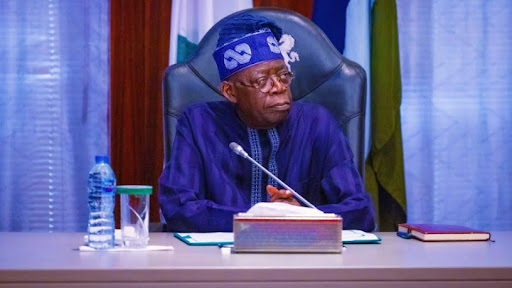
President Bola Tinubu has scrapped the five percent excise duty on telecoms services, while his administration celebrates the collection of over ₦600 billion ($400 million) in value-added tax (VAT) from global tech giants, such as Facebook, Amazon, and Netflix.
The removal of the telecom levy, confirmed by the executive vice-chair of the Nigerian Communications Commission (NCC), Dr. Aminu Maida, is expected to ease cost pressures for more than 171 million active mobile subscribers.
Maida explained that the intervention was designed to ease the financial strain on citizens who have, since January 2025, endured a 50% cost hike due to rising energy costs, foreign exchange shortages, and higher equipment import bills.
The tax, first introduced under the Buhari administration in 2022, was widely criticised by telecom operators who argued, at the time, that it would exacerbate already heavy burdens on both businesses and consumers.
Industry stakeholders, including the Association of Licensed Telecom Operators of Nigeria, had warned that the levy would stack on top of over 39 existing taxes, a 7.5% VAT, and a mandatory 2% NCC contribution.
With operators passing costs down to subscribers, the excise duty risked raising the total tax burden on telecom services to 12.5%.
“President Tinubu’s reversal is therefore seen as a consumer-friendly intervention that could restore some relief in a sector critical to Nigeria’s digital economy,” Maida stated.
The tax cut comes as the government is consolidating gains from the international digital economy. Mathew Osanekwu, special advisor to the chairman of the Presidential Committee on Fiscal Policy and Tax Reforms, revealed that recent amendments to the VAT Act have enabled Nigeria to capture revenue from “foreign service providers operating in its cyberspace”.
These platforms, though not domiciled in Nigeria, are now recognised as VAT collection agents under Section 10 of the Act, remitting directly to the Federal Inland Revenue Service (FIRS).
The ₦600 billion collected demonstrates the scale of Nigeria’s reliance on foreign platforms for entertainment, e-commerce, advertising, and other services. For the government, it marks a milestone in expanding the tax net beyond oil revenues while aligning domestic practices with international tax standards.
Professor Taiwo Oyedele, chair, Presidential Committee on Fiscal Policy and Tax Reforms, emphasised that no new taxes have been introduced under Tinubu. “Instead, the focus is on consolidating multiple levies, broadening compliance, and making taxation simpler and fairer.”
The twin developments, removal of the telecom excise tax and enforcement of VAT on foreign platforms, reflect Nigeria’s strategy to balance relief for ordinary Nigerians with sustainable revenue generation.
Share