


When President Cyril Ramaphosa sat down on stage with Jonathan Karl at Semafor’s inaugural Silicon Valley and the World summit in Menlo Park on Monday, the moment captured a refreshing confidence in South African technology diplomacy.
Leading an approximately 300-member national delegation into a forum of more than 400 global chief executives and policymakers alongside summit co-chairs Sam Altman and Ruth Porat and advisory board leaders Andy Jassy, Jane Fraser, and Standard Bank’s Sim Tshabalala, South Africa arrived in California not to watch the future unfold, but to help shape its place within it.
Opening the week in Menlo Park ahead of engagements at Stanford University, Alphabet, Google, Cisco, Palo Alto Networks, and Microsoft reflects smart, forward-looking commercial engagement.
According to official United States Trade Representative figures, bilateral goods and services trade between the United States and South Africa grew 10.1 per cent in 2025 to an estimated 28.8 billion dollars, underscoring the resilience of economic ties.
With global hyperscalers committing roughly 650 billion dollars to artificial intelligence capital expenditure in 2026 and three-quarters of last year’s 259 billion dollars in artificial intelligence venture capital concentrated in the United States, engaging innovators and capital allocators directly places South Africa where long-term partnerships are forged.
Even more encouraging is how naturally South Africa’s strengths align with the priorities voiced at Semafor on Monday.
As Semafor editor-in-chief Ben Smith observed, grid constraints across North America and Europe have opened a major opportunity for agile international partners ready to host next-generation computing infrastructure.
On the Menlo Park stage, Citigroup chief Jane Fraser noted that global investors are growing thoughtfully selective about backing real demand-side productivity, while OpenAI chief Sam Altman emphasised that societies want assurance that artificial intelligence remains anchored on team human.
South Africa brings compelling answers on every count. Already home to roughly 40 percent of Africa’s data centres and the majority of the continent’s total data-centre capacity, the country combines established Microsoft, Amazon Web Services, and Google cloud regions with deep financial markets, world-class solar and wind endowments, and Operation Vulindlela reforms.
Backed by a growing electricity surplus and plans for 14,000 kilometres of new transmission lines, the Department of Electricity and Energy arrived in California alongside Eskom, NECSA, and SANEDI with a phased 50-megawatt flexible artificial intelligence load demonstration at Grootvlei that turns data-centre demand into a water-efficient grid asset.
Applying artificial intelligence across healthcare, education, agriculture, mine safety, logistics, and public services offers what President Ramaphosa rightly called commercial opportunity in a dynamic growth market rather than charity.
Just as inspiring is the generational opportunity this mission unlocks for young South Africans to drive homegrown enterprises and local intellectual property from major cities to townships and rural communities.
Uniting eight Cabinet ministries with business leaders, start-ups, science councils, and postgraduate and doctoral students connects policy, capital, and youth talent in a single team, reinforced by the President’s message in San Jose that talent is born everywhere and Wits computer scientist Professor Benjamin Rosman’s call to build domestic capability over the decisive next two to five years.
Crucially, young innovators returning from California can build on established institutional platforms at home, underpinned by the World Economic Forum’s Centre for the Fourth Industrial Revolution presence in South Africa through the South African Centre for Industry and Technology hosted at the University of Pretoria alongside Wits, the University of Cape Town, Walter Sisulu University, and the CSIR to advance applied artificial intelligence adoption, industrial pilots, and future-ready workforce skills.
South Africa is equally poised to enrich global artificial intelligence governance. A landmark study published on Monday by the St Gallen Endowment’s digital Policy Alert, analysing 1,756 policy developments and 84 artificial intelligence rulebooks, celebrates a fifteenfold surge in domestic policy activity and strong convergence around transparency and safety, while its international benchmark shows vast room for African leadership on worker empowerment and binding cooperation, as no African framework yet sits among the nine global instruments assessed.
As my own doctoral research on anticipatory, Ubuntu-informed, and responsible artificial intelligence smart city design in Lanseria Smart City explores, embedding public participation, institutional coordination, spatial inclusion, and digital sovereignty before systems are deployed ensures innovation serves human dignity and collective wellbeing as the world looks toward the Geneva AI Summit 2027.
What ultimately turns this week’s promise into lasting prosperity is the delegation’s commitment to rapid follow-through.
By proposing a focused 90-day implementation window upon return and a standing partnership uniting government, business, students, and researchers, the President has paired global ambition with practical momentum.
From the Semafor stage in Menlo Park to campuses, start-ups, and emerging smart cities back home, South Africa is demonstrating that an African democracy can help build, power, and humanise the intelligent age.
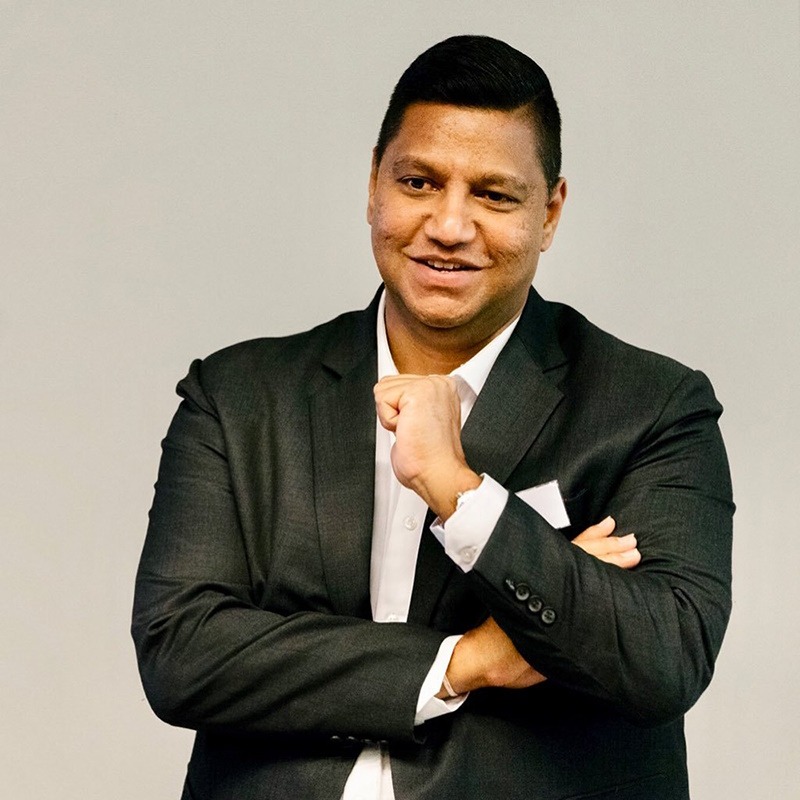
Sunil Geness is a Global Government Affairs Executive at SAP and a PhD candidate at the Wits School of Governance whose doctoral research is titled “Towards an anticipatory, Ubuntu-informed, and responsible AI smart city design in Lanseria Smart City.” He writes in his personal capacity.
Share