


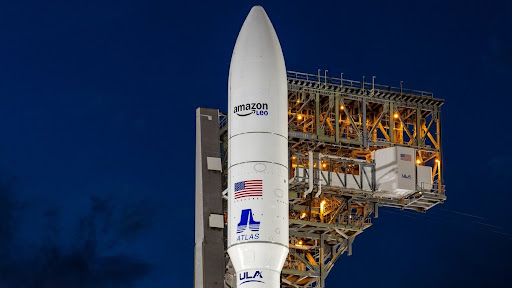
Nigeria has opened up its satellite broadband market to Amazon's Project Kuiper, paving the way for direct competition with Elon Musk's Starlink in the country's rapidly expanding Low Earth Orbit (LEO) internet space.
The Nigerian Communications Commission (NCC) has granted Kuiper a seven-year landing permit, allowing the company to launch its satellite constellation over Nigerian territory in 2026.
According to the NCC, the decision reflects Nigeria's commitment to "promoting competition, innovation, and investment" in satellite communications while adhering to international regulatory standards.
The regulator added that opening the market to multiple satellite operators would improve service quality and expand broadband access, particularly in underserved areas.
Kuiper’s clearance effectively ends Starlink’s period as the sole large-scale LEO satellite broadband provider in Nigeria.
Since launching locally, Starlink has built a strong early presence, becoming the default satellite option for households and businesses beyond the reach of fibre and mobile networks.
Amazon’s entry introduces a rival with comparable scale, deep financial resources and global infrastructure.
Under the permit, Kuiper is authorised to provide fixed satellite broadband, mobile satellite services and connectivity for moving platforms such as ships and aircraft.
The approval also covers Ka-band frequencies, which support high-capacity, low-latency internet services.
Commenting on Kuiper’s broader international rollout plans, the company noted that it aims to work with local regulators and partners to deliver “reliable, high-speed connectivity” in emerging markets.
Share