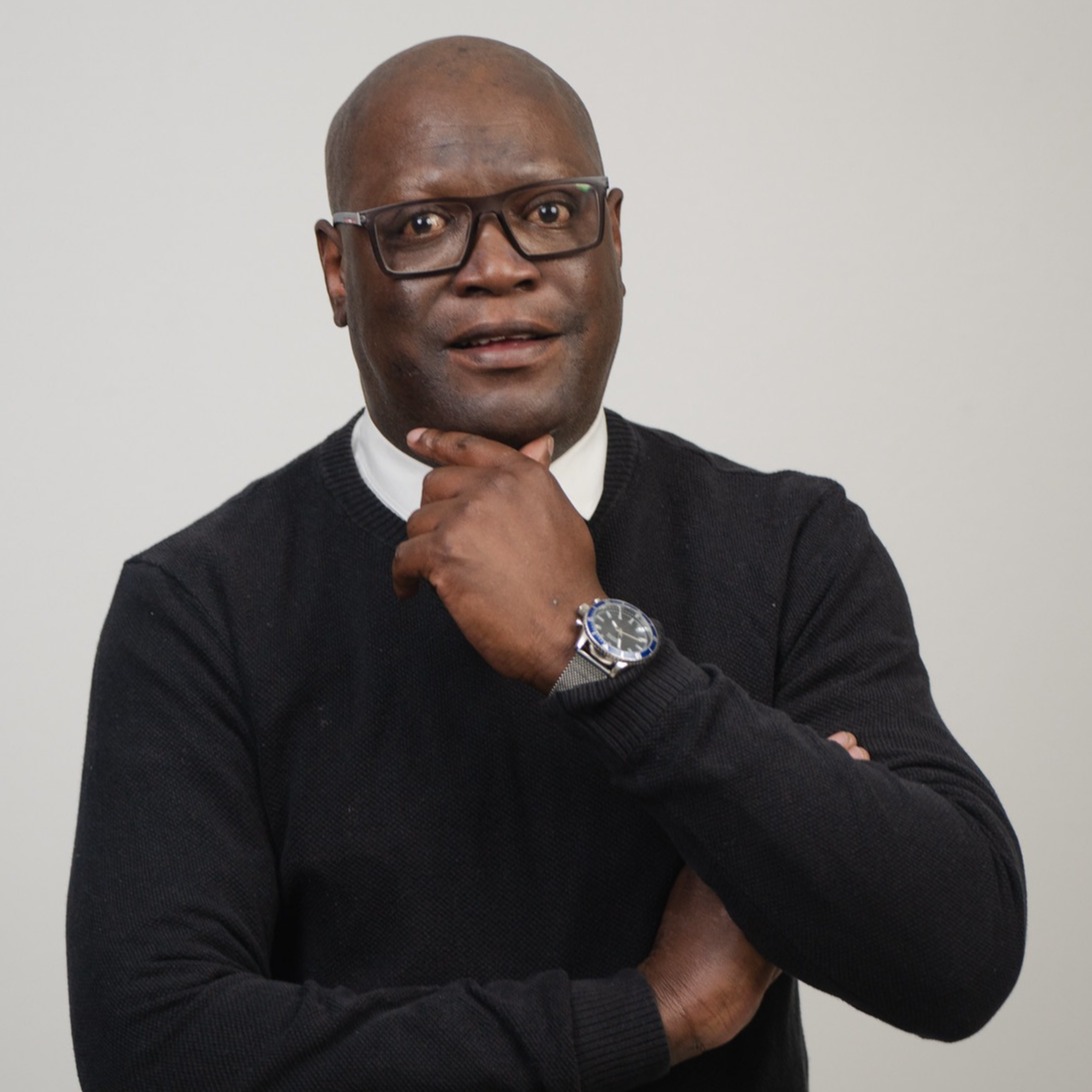



Nagarro, a global digital engineering and IT services firm, identifies South Africa and the continent as a 'strategic geography' for Banking, Financial Services, and Insurance (BFSI), signaling a strong outlook for the sector.
Saurabh Gupta, director - BFSI, Nagarro, who was in South Africa recently for the BFSI Innovation & Technology Summit 2025, spoke with ITWeb Africa about the sector's prospects and challenges, as well as his overall assessment of the event.
At the Summit, Gupta discussed how digital engineering and AI-driven innovation are reshaping banking and insurance in Africa.
Aligning with the summit’s core themes— Artificial Intelligence (AI) transformation, ethical finance, cybersecurity, and payment modernisation—he said Nagarro assists BFSI institutions upgrade their technology, foster consumer trust, and advance sustainable digital growth.
Gupta said: Let's start with the BFSI summit. I think the Summit was really good. It was quite productive. We had a lot of participation from banks and their senior executives, including their CIOs, CTOs, and VPs.
“I think it was a great platform wherein all the leaders could come together, they could share their thought process, their apprehensions, their problem statements, and they can also look for solutions, what one bank is doing or what the service providers are providing.”
During the interview with ITWeb Africa, Gupta emphasised the importance of collaboration in tackling industry challenges and the impact of AI on business decisions, urging organisations to adapt to emerging technologies.
Gupta further elaborated on the necessity of partnerships with technology providers to enhance security in the BFSI sector. He also discussed the vital role of digital transformation in South Africa, noting that companies are investing heavily in technology infrastructure.
Regarding tech talent crunch, Gupta mentioned Nagarro's initiatives to collaborate with educational institutions on curriculum development and to provide training for juniors while upskilling senior employees, thereby supporting the company's growth objectives in the region.
Turning to establishing long-term relationships in South Africa, Gupta outlined how the company is making internal assessments in South Africa and elsewhere that guide who to collaborate with.
Gupta responded: “Yeah, so that's a very good question because. When we grow in South Africa, we look for different partners in different areas, so it can be technology partners, it can be growth partners, it can be resourcing partners, it can be any of the partners in terms of growing the ESG activities.
“The very first thing is a trust and an ethical company, so a partner has to be very much ethical and has to have a trust factor very prominent in the market, which is something that drives our first checkpoint towards a partner.”
He continued: “The second thing is presence and growth. What is the vision? What is the presence of the partner? How can we partner? And both of us work together for the benefit of our customers, try to resolve some of the challenges that they are facing, and bring value to the table. So these are two factors. And then the last one is, of course, their financial stability. So these are the three key factors that we always look at while we partner with someone in the South African region.”
In the interview, Gupta also addressed how emerging technologies are impacting businesses across the world and Nagarro’s vision for integrating AI automation into its business model.
He explained: “So, now that's where the challenge comes. Technologies like your AI, your agentic AI, are now common. Then you have your reasoning AI, quantum AI coming in.
“A lot of different things are coming, and that's where we advise most of our customers to go towards being an evolving organisation, so that instead of going through transformations or cycle after cycle when a new technology comes. You create a self-evolving enterprise that actually helps you out in testing those new technologies and then adopt them in a much faster manner, rather than going through a new transformation cycle.
“So I think all the newer technologies that are coming, are coming with a lot of positives and negatives. What the customers need to understand is how they test before they adopt.”
Share