


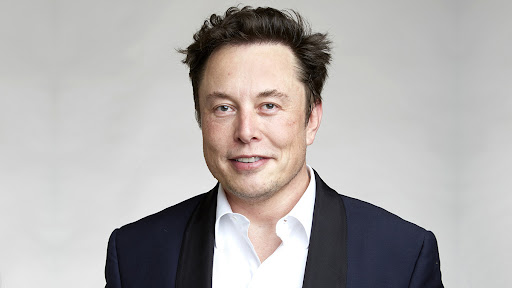
Elon Musk has taken aim at the global telecoms industry with a bold announcement that is set to transform mobile connectivity.
Speaking at the ALL-IN Summit today, Musk revealed that his companies SpaceX and Starlink are developing new mobile phones equipped with chipsets that connect directly to satellites. He says that these phones will “probably start shipping within two years”, which will enable global high-bandwidth connectivity without the need for national carriers.
“It will allow SpaceX to deliver high-bandwidth connectivity directly from the satellites to the phones. The chipset needs to be modified to accommodate these frequencies, which would likely take a two-year timeframe. But the net effect is you will be able to watch videos anywhere on your phone,” said Musk.
The anticipated introduction of Musk's mobile phone comes a year after Starlink introduced the direct-to-cell service, which pushed the telecoms sector to new heights while also placing mobile network operators under pressure to reconsider their plans or risk irrelevance.
The latest prospect of phones bypassing traditional mobile networks places mobile operators under further pressure, particularly in Africa, where the telecoms sector remains the backbone of connectivity and financial services. To date, 25 African countries have licensed Starlink to operate services in their countries, including Nigeria, Ghana, Kenya and the Democratic Republic of Congo.
Musk’s move is set to accelerate competition, forcing operators to innovate to stay relevant in this increasingly competitive market.
Nigeria, Africa’s biggest economy, has already taken steps in this direction. In June, the National Space Research and Development Agency (NASRDA) signed an agreement with Chinese firm Galaxy Space to roll out direct-to-device satellite communication nationwide. NASRDA director-general Dr. Matthew Adepoju hailed the partnership as “a new era in Nigeria’s communication landscape,” which would connect rural and underserved regions.
Low Earth Orbit (LEO) satellites like Starlink offer Africa a viable alternative where rolling out terrestrial infrastructure is costly or technically difficult. But industry experts caution that bridging the continent’s digital divide will require a mix of satellite, fibre, and terrestrial solutions.
Musk acknowledged that regional carriers like AT&T, and in Africa’s case, MTN, Airtel and Vodacom, will not disappear overnight. “They still have spectrum, but yes, you’ll be able to have Starlink like having AT&T or Verizon,” he said.
For Africa, Starlink is no longer an abstract idea, with the service licensed in nearly half the countries on the continent, and, as of the first half of 2025, active in at least 20 African countries. The service provider has outlined plans to reach more than 45countries by the end of 2026.
For more of Musk’s video announcement, shared on X by tech commentator DogeDesigner, sparking global debate over the future of mobile connectivity (watch here).
Share