


Libyan telecommunications company Lap Green Networks has hit out at the Zambian high court’s decision last week not to grant the operator interim protection for its seized assets in that country.
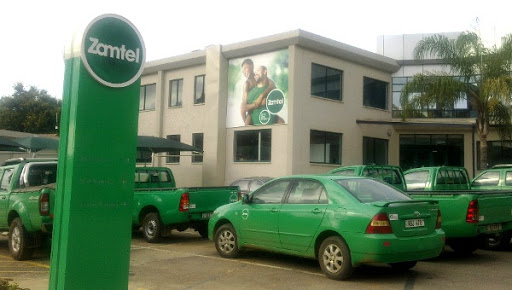
Lap Green Networks' purchase of a 75% stake in Zamtel in 2010, valued at $257 million, was controversially reversed by Zambia's government in January. The move followed a government-sanctioned inquiry, which said the sale was marred by “irregularities”. Zambia earlier this year also seized bank accounts belonging to Zamtel as part of a money-laundering investigation.
Following the take-over, a bitter court battle has been underway, as Lap Green Networks, which is owned by the Libyan government, is in a bid to force Zambia to reverse its decision to take over its majority share in Zamtel.
However, the Zambian high court last week refused to grant interim protection for Lap Green’s seized assets, which the telco says now has a market-value of approximately $480 million.
Lap Green says it has decided not to appeal this decision, but that it rather plans to address the issue in its case against the government, which is scheduled in the Zambian High Court on 9 July, 2012.
“We are surprised and disappointed at the press reports in Zambia which have wrongly indicated that our ‘claim’ has been rejected, as this was a preliminary precaution in which we sought the court’s support and cooperation to protect our property until the case is heard on July ,” said Wafik Al-Shater, chairman and chief executive of Lap Green Networks.
“Our case will underline how unacceptable and disturbing we feel it is on many levels, that one of the largest investors in this country can be physically removed from its own company, and have its assets summarily taken away with no market-value compensation being offered as is required by law,” Al-Shater added.
Prior to Libya’s revolution that led to the ousting of its leader Muammar Gaddafi, Lap Green Networks aggressively expanded its operations across Africa in countries such as Zambia and Rwanda.
But the uprising in Libya and subsequent sanctions, from organisations such as the UN in February 2011, led to cash flow problems for the government and possibly Lap Green Networks as well, says Dobek Pater, a partner at Africa Analysis.
Problems have dogged the telco in other African countries too, apart from Zambia.
Rwanda operator Rwandatel, which was 80% owned by Lap Green, had its licence last April revoked by that country’s regulatory officials for not meeting operating standards that include performance targets in terms of investment, coverage, network rollout and quality of service.
US and UN Sanctions have since been lifted against Libya, but the telecommunications company is not a priority for the country at this stage, as Pater says Libya is more focused on rebuilding.
“I suspect that the Libyan government, which is still in disarray, is a lot more worried about stabilising the situation at home,” he said.
Meanwhile, Lap Green’s Al-Shater has said that its former Zambian assets “form part of an international investment fund which is wholly owned by, and acts on behalf of, the people of Libya.”
Al-Shater said he is determined to see the return of the assets by fighting for it in either the Zambian or even international courts.
Share