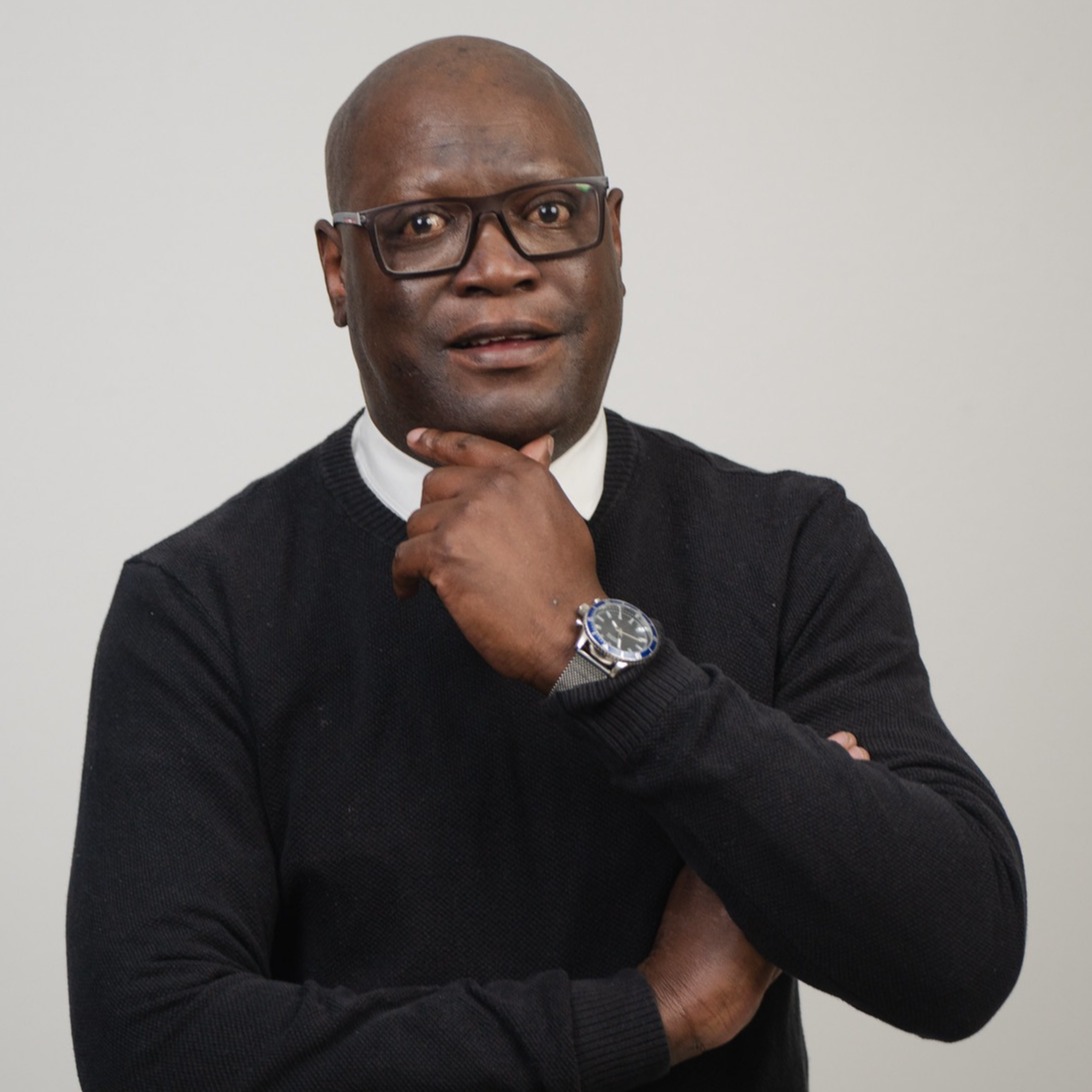



MTN Group president and CEO Ralph Mupita warned last week that Africans risk becoming the world's digital underclass, citing the digital economy as the continent's best opportunity at ensuring people's dignity.
Mupita, on behalf of Africa's most prominent telecom services provider with operations in 16 markets, 15 of which are in Africa, accepted a call to action from Nigeria to assist in the collection of African languages datasets.
These are required to create the continent's own large language models (LLM) to power Artificial Intelligence (AI)-driven solutions for Africa's 1.5 billion people, who would otherwise be excluded from the global AI ecosystem.
Mupita was speaking on 'The Y'ello Chair Vodcast,' the telco's initiative that promotes candid discussions amongst leaders, change makers, and industry experts to share ideas and debate trends influencing Africa's digital future.
Dr. Bosun Tijani, Nigeria's minister of communications, innovation, and digital economy, spoke on the show and stressed that in order to accelerate AI in Africa; a coordinated public-private effort was urgently required to fund academic research into the continent's multiple languages.
He challenged the MTN Group to deploy resources for this.
Mupita accepted the task: “We like these kinds of partnerships. Challenge accepted.”
Nigeria is MTN's largest market, with over 84.1 million subscribers as of the end of March 2025, accounting for a significant portion of the company's earnings.
More than 500 languages are spoken in Nigeria, the continent’s most populous country.
The Vodcast was filmed on the sidelines of the 80th United Nations General Assembly in New York and was hosted by Angela Wamola, who is the head of sub-Saharan Africa for the GSMA mobile industry association.
The Vodcast followed the debut of the Nigerian ATLAS for Languages and AI at Scale (N-ATLAS).
This is an open-source multilingual LLM that aims to understand and generate Nigeria's different voices while also digitising and preserving the country's linguistic richness and creating datasets for AI applications.
N-ATLAS is a joint public-private effort of the Nigerian government and Awarri Technologies.
The ATLAS framework is open and available to other African countries, enabling local language innovation and transforming education, health, commerce, and governance.
“We have to avoid the risk of Africans being a digital underclass,” Mupita said of the work to ensure that citizens didn’t feel excluded on the continent where there are more than 2 000 languages and most are poorly represented in the global AI ecosystem.
He said the digital economy was the “best bet” to ensure that citizens have dignity, hope and opportunity.
Mupita went on to explain: “The outcomes we want are that people are digitally included, economically included and that they have dignity. This dignity point for me is very important because poverty can include all sorts of indignity, but embracing technology should take all that away.”
Share